

You may have heard of open-ended and close-ended toys, but what do these names actually mean? What are the benefits of open-ended toys? What are the differences between open-ended and close ended toys? Should you have only one type or both? Let’s find out!
What are Open-Ended Toys?
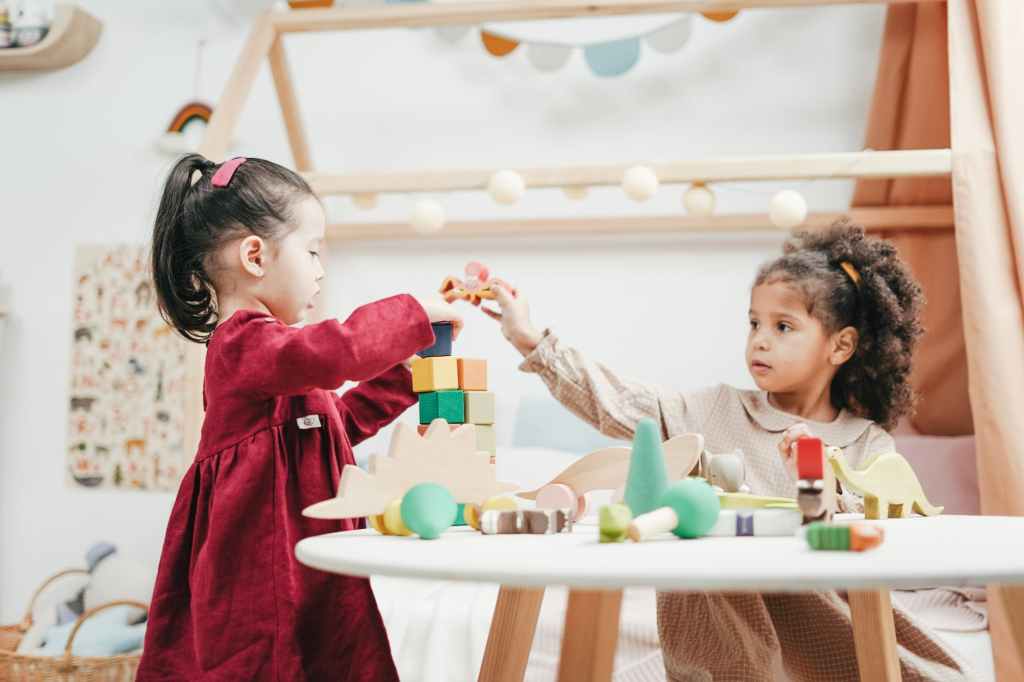
Open-ended toys have the ability to be anything. They can change purpose multiple times and are only limited by your imagination. For example: a building block can be used to build a tower, it can create a bridge for a car to drive over or it can become a house. Even a simple stick can be used as an airplane flying in the air, a magic wand or a delicious ice-cream. Open-ended toys are wonderful – they encourage your child to use their imagination and because they have the ability to be so many different things, they can take the place of several toys at once. For example: you could buy a set of small wooden discs which can be used for money, they can become plates for dolls to eat off or stacked as a tower.
Here’s a list of our favourite open-ended toys:
- Wooden rainbows and plates
- Rocks, shells and seed pods
- Play silks and play cloths
- Wooden building blocks
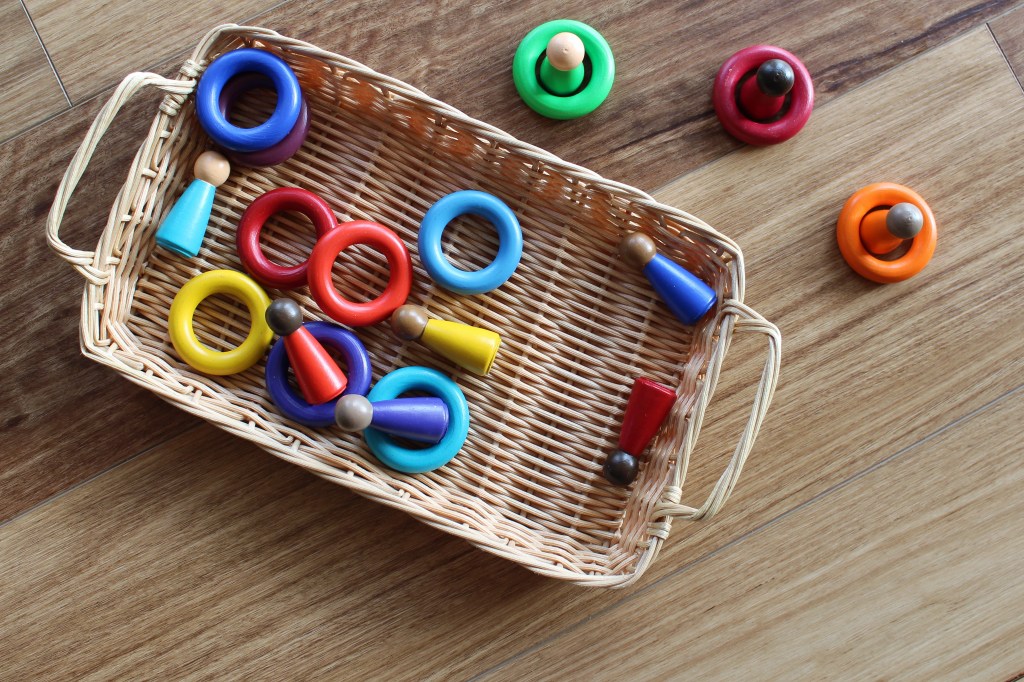
- Wooden rings and coins
- Lego building blocks

What are Close-Ended Toys?
These toys have a specific purpose. There is a correct way to use them and the activity has an end point. An example of a close-ended toy is a puzzle: you put the pieces together in the correct order and then the puzzle is complete.
Here are some examples of other close-ended toys:
- Musical instruments
- Books
- Many Montessori-style materials
In between these two extremes of open-ended and close-ended toys there are some resources which fall in the middle. These resources can be used in imaginative play, but have a specific purpose or represent a specific object. For example: an animal figure can be used in imaginative play, but it is always going to represent an animal. Same goes for wooden houses and people – they can be used to create engaging small world play, but they will always be houses and people.
These middle ground resources include:
- Wooden and felt people
- Cars, buses, trucks and diggers
- Trains and a train track set
- Dolls house with furniture and people
- Small wooden houses
- Wooden animal figures
Bringing it all together
Having a variety of open-ended and close-ended resources can encourage independent and self-directed play. On a toy shelf this could look like; a set of building blocks, play cloths, wooden animals and people, small wooden houses, small cars and train tracks and train set. With this selection of toys, a child would be able to create a variety of different play settings include farm play, train and car play, building towers, building houses and roads etc.
Steiner on Toys
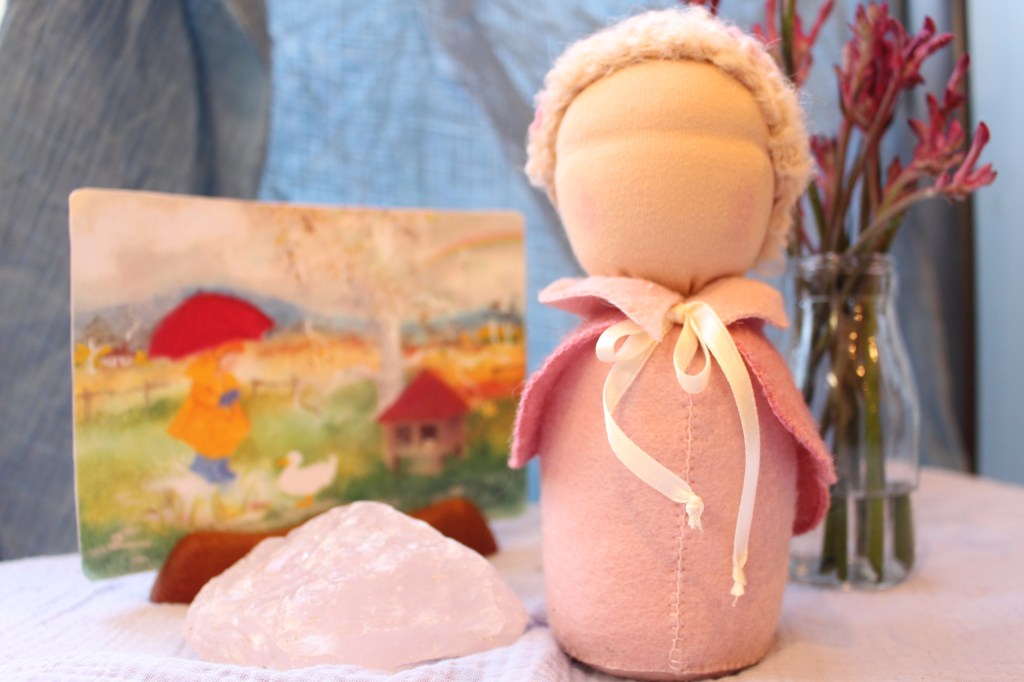
Steiner believed that in the first few years of life the child is most sensitive and is unable to filter out information. He said, ‘the most important thing during the first seven years is to nourish a child’s sense organs.’ For this reason, toys and resources in Steiner kindergartens are made out of natural materials such as wood, cotton, wool and silk. Wooden toys still have a sense of life in them and give the child a realistic sense of weight when they lift the object. Steiner also discussed the importance of having a simple doll. The doll should be so simple that it can be made by tying knots in a handkerchief. He believed that the lack of detail in the doll would stimulate the child’s imagination. This idea still comes through in many of the cloth dolls that you see in Waldorf kindergartens.
In Our Home
In our house we focus on having a mix of open-ended and close-ended toys which are mostly produced from natural materials. These toys are often made from wood, are sometimes more expensive, but are very sturdy and will last for generations. This is not to say that all plastic toys are terrible. We certainly have plastic toys and resources such as Lego can lead to all kinds of imaginative play. Those which only require the child to push a button, are limited to a single purpose or don’t encourage the child to use their imagination are the kind which I try to limit. When buying a new toy, I like to ask; how is this stimulating imagination? Can this toy be used in multiple ways? How long will it last?
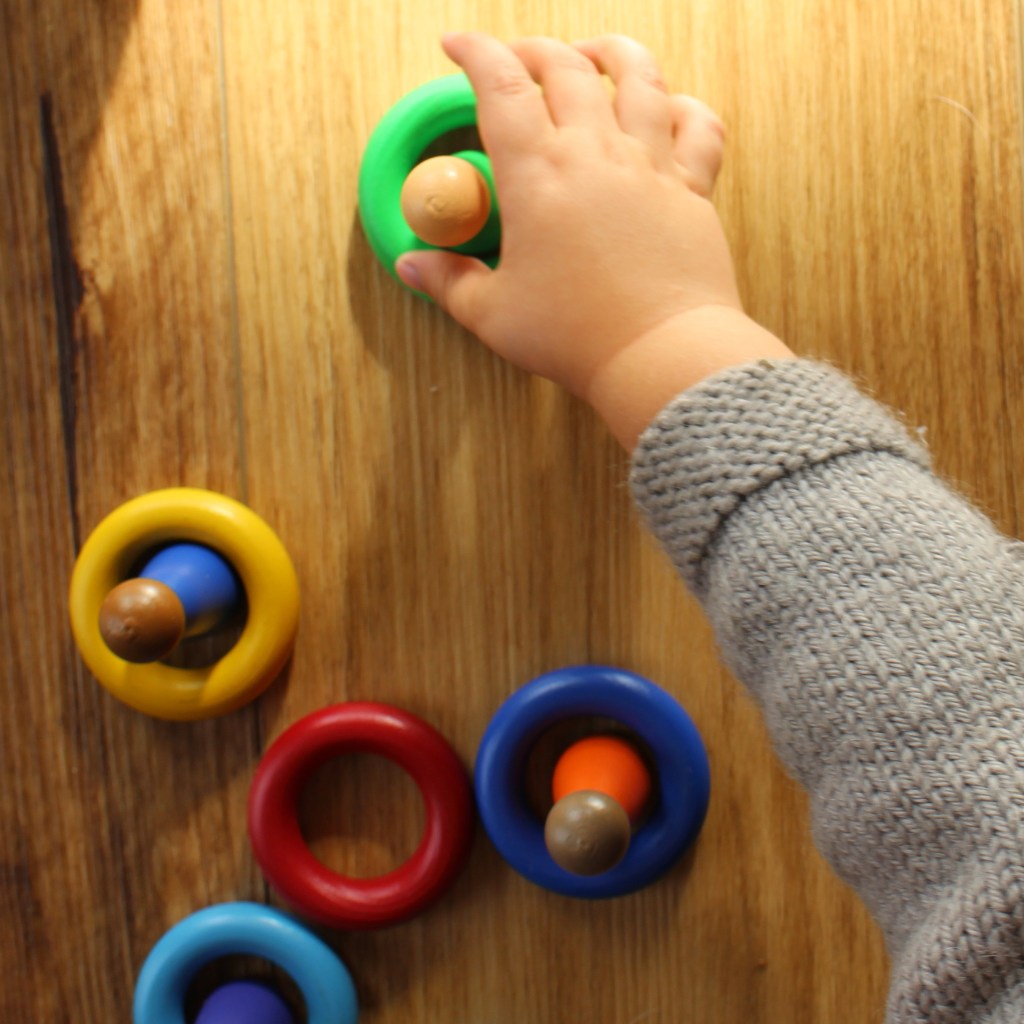
It’s good to keep in mind that having fewer toys readily available can assist your child to engage in deeper and more meaningful self-directed play. Studies have shown time and time again that children benefit from having a simpler environment with fewer choices. If you find yourself in a situation with too many toys (it happens to all of us!) then rotating through resources on a regular basis can be a good way to avoid children becoming overwhelmed with choice. Choosing just a few good quality toys to include in your collection can also be a way to justify the higher cost of wooden toys. This is definitely a case for quality over quantity.
Do you have a balance of open-ended and close-ended resources? What will you be adding to your collection next?
Further reading:


 The Steiner Connection
One response to “Open-Ended vs Close-Ended Toys”
[…] more simple than store-bought toys which stimulates imagination and encourages open-ended play. Handmade toys are usually made from natural materials, minimizing the exposure to harmful chemicals commonly […]
LikeLike