
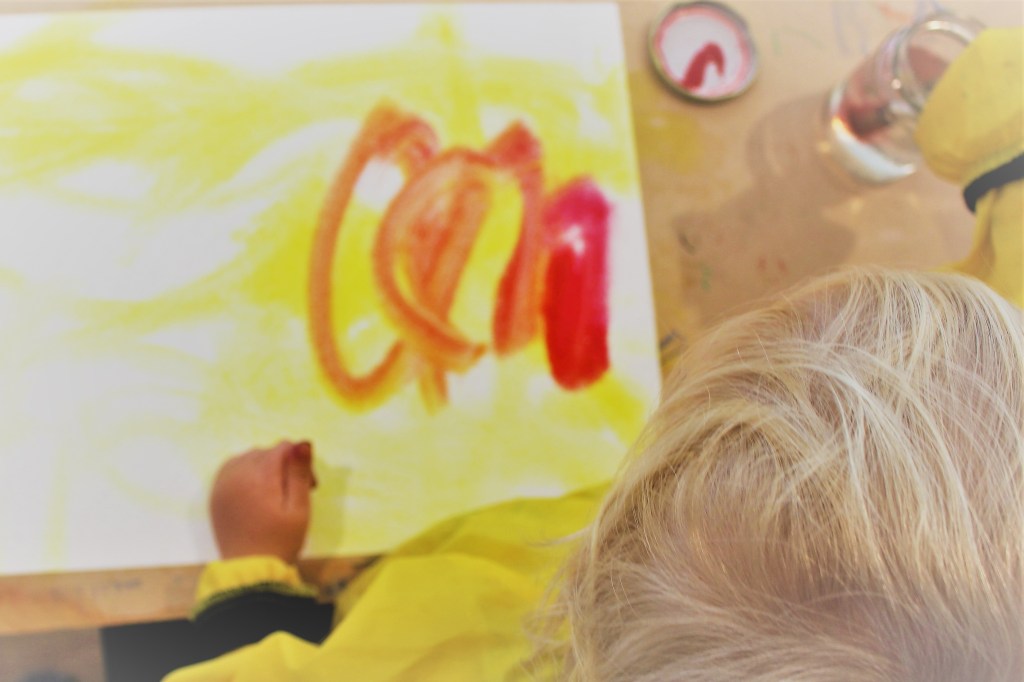
This post is part of a series on how to incorporate 5 aspects of the Steiner kindergarten program into your Waldorf home. Today we will be focusing on the element of creating art through painting. For an overview of all 5 aspects, click here.
The style of painting done in the Waldorf kindergarten program is called wet-on-wet watercolour. It utilises liquid paint, which Steiner referred to as ‘liquid colour,’ on heavy paper which is pre-soaked in water. This creates an effect where the colours run across the page and blend into one another. In the early childhood education this style of painting is used to explore the nature of each colour and what happens when two colours blend together. Steiner felt that this style of painting supports the child in their ‘dream consciousness’.
Learning about colours through this style of painting encourages the child to have an inner experience of the colours. The child develops a deep understanding of how mixing two certain colours together creates another one. Children who have learnt to paint in this way rarely have issues remembering which two primary colours create a particular secondary one – they have lived through the experience and the knowledge lives within them.
The act of painting develops fine motor skills. It does so through the holding of the handle, the moving of the brush across the page, and the careful act of dipping it into the water and paint. Painting nourishes the sense of sight through exposing the child to rich and varied colours. If children are required to carry their painting board over to a drying rack, it also improves the sense of balance.

According to Steiner these early experiences in colour are important when the child later learns to read:
‘If you prevent children from having an intensive experience of colour perspective, they will not develop the necessary incentive while learning to read… These colour experiences will stimulate mobility in the child’s mental imagery, suppleness in feelings, and flexibility in the will activities.’
Rudolf Steiner – The Child’s Changing Consciousness
Similarly to drawing in the Waldorf preschool, the process of painting is an unguided one. The child is encouraged to explore the colours which are presented to them and to express their inner will. They may need to be reminded to rinse their brush thoroughly in the water before changing colours, and some may need to be encouraged to try a different colour, ‘I wonder what would happen if you added yellow to your page.’ However, ultimately what they choose to paint (and whether they choose to paint at all) is up to the child.
Colour Choice
When deciding which colours to offer Steiner said that the disposition of the child should come into consideration. As adults we typically think of red as an awakening colour, but children feel the complimentary colour more strongly than we do. This means that when painting the colour red, the child will actually be feeling green which can have a calming effect. This can be an interesting aspect to consider when choosing colours to offer your child.

Generally, two of the primary colours are offered at once. You can offer all three primary colours, but it may take some time before children are able to paint accurately with them. Oftentimes it will turn into a muddy, brown mess. Regardless of the finished product, painting with three colours provides an important learning opportunity and it is a good idea to offer it from time to time.
Another lovely way to vary your colour palette is to choose colours which correlate to the seasons. In Summer you may focus on yellow and gold, in Autumn; red and orange, Winter; blue and red, Spring; yellow and green. Changing your colour palette in this way can enrich the child’s experience of the seasons and bring a deeper understanding to the world around them.
Materials and Starting Out
The first paints which we purchased were Stockmar Circle Colours in red, yellow and blue. These paints are Stockmar’s latest development and are specifically designed to be suitable for young children. They have been designed to blend together beautifully and produce stunning secondary colours. As my son grows I will expand our palette by adding in orange and different shades of yellow and blue. However, the Circle Colours are perfect to start with and much more affordable than purchasing a large selection of paints.

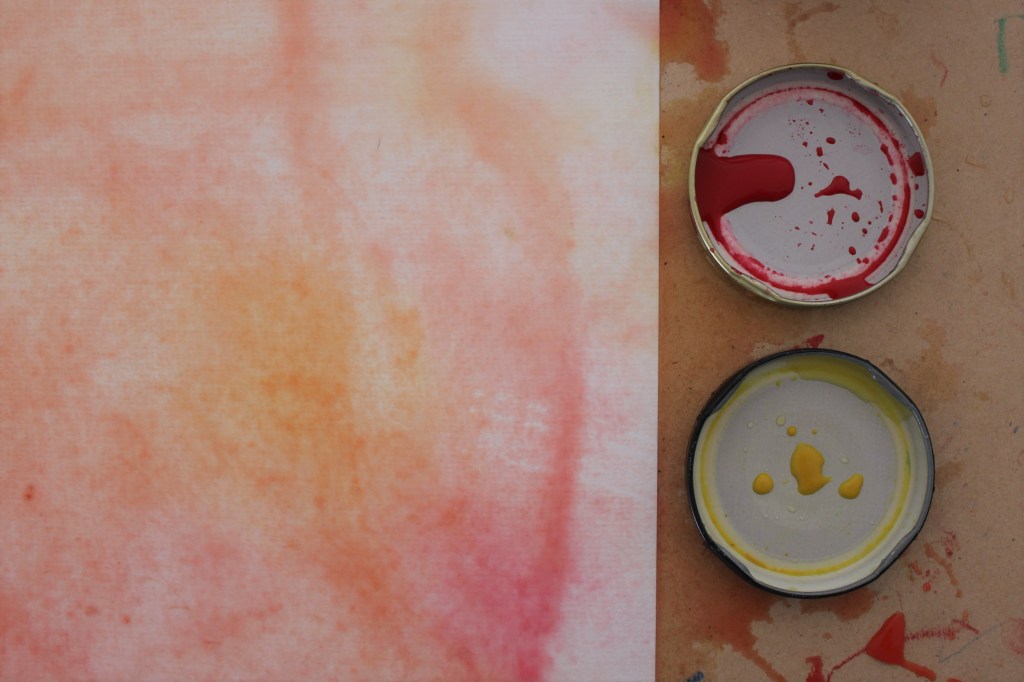
With very young children it can be nice to start with just one colour. This is a great way for them to explore the act of painting and to develop an understanding of how the paint moves across the page. I started doing this with my son when he was about 18 months old. After about 6 months I introduced a second colour. Using two colours requires more technique as you must rinse the brush thoroughly in between colours. To minimise mess and wastage, I give my two-year-old a small amount of each colour in two jar lids. Inevitably, the lids end up containing a mix of both colours (and the entire contents are often tipped onto the page!) and doing it this way means that a bigger jar of paint hasn’t been wasted.
The Process
Here is our complete Waldorf painting process from start to finish. This style of painting has a relaxing and freeing effect. I hope you enjoy your time spent painting as much as we do!
Materials
- Painting board (a large wooden board, a little bigger than A3 paper is a good size)
- A flat paintbrush
- Stockmar paints (Circle Colours are a good place to start)
- Small jars (old baby food or nut spread jars)
- Sponge
- Watercolour paper
Process
- Firstly, soak the paper. Remember to use a heavy paper with texture on one side. You may like to use an A3 sheet or A4 depending on the age of your child.
- While the paper is soaking, set up the board, paints, brush and water jar. To mix the paints add one teaspoon of paint into a jar with 1-2 tablespoons of water. Mix thoroughly and add more water if needed to reach your desired colour.
- As we are setting up I like to tell a story about the colours that we will be painting on that particular day. The story goes something like this:
Once a upon a time there was a bright yellow paint. It shone as bright as the sun on a hot Summer’s day and shimmered like the golden sand at the beach. One day the yellow paint was picked up by the bristles of a paint brush and carried away to colour the lands. Everywhere they went, they left behind a beautiful, bright yellow. While the paint brush was out colouring the lands it happened to meet a brilliant blue. This blue was as brilliant as the sky on a clear Autumn day and as rich as the deepest ocean. The paint brush said goodbye to the yellow paint and dipped it’s toes in a lake to wash them off. When it’s toes were clean the paint brush picked up the blue paint and took it away to colour the lands. Everywhere they went they left behind a brilliant blue. When the paint brush grew tired, it said goodbye to the blue paint and dipped it’s toes in a lake to wash them off again.
I wonder what adventures your paint brush will have today?
4. When you are ready to paint take the paper which has been soaking and place it on the painting board. Make sure to place it textured side face up. Wipe the paper with the sponge gently to remove excess water and eliminate any air bubbles.
5. Depending on the age of your child and their level of experience it may be beneficial to demonstrate how to wash the brush before changing colours. When beginning your own painting it is also useful to demonstrate long brush strokes on the page to encourage the child to paint in this manner.
Further Reading:
The Education of the Child – Rudolf Steiner
What Would Steiner Say… About Painting with Children? – Steve Sagarin


 The Steiner Connection