
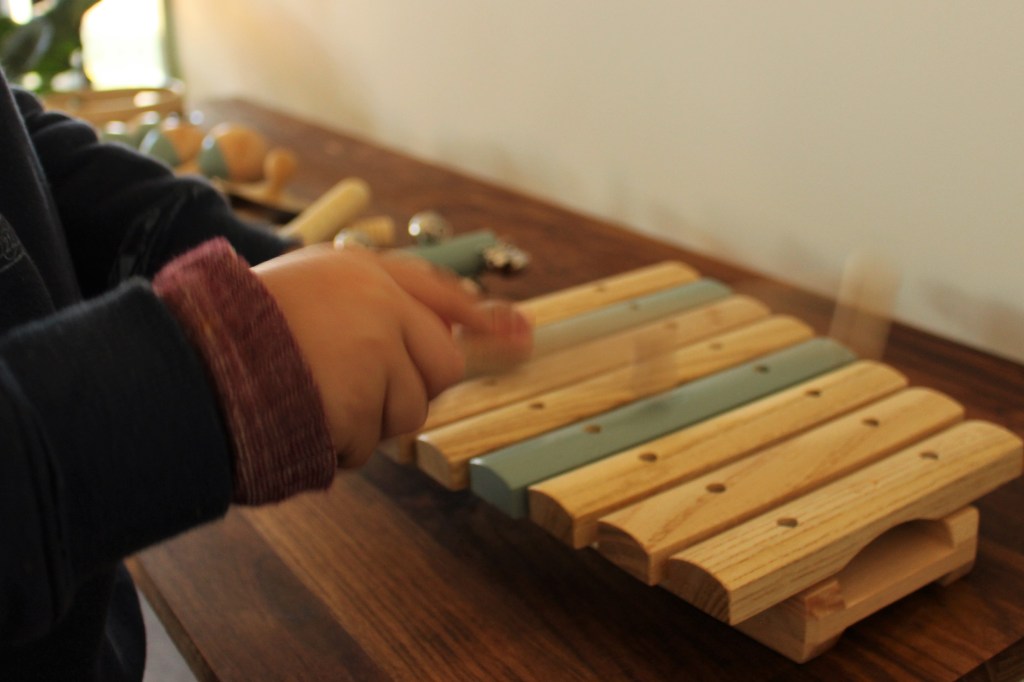
If you have ever visited a Steiner playgroup or kindergarten you may have experienced music in the mood of the fifth.
This style of Steiner music has an ethereal, expansive quality. It is thought to best reach children in their dream consciousness.
This musical style is based on indications from Rudolf Steiner as to what is most appropriate for young children in the early years.
Although I have been teaching and playing music for many years I had never come across this type of music until recently. I was intrigued and had to learn more.
What is music in the mood of the fifth?
Guidelines for music in the mood of the fifth have been developed in the years since Steiner’s death. Steiner spoke on music for young children and gave strong indications as to what was most appropriate, but never defined the music as a specific style.

Steiner on music
Steiner recommended the human voice as the best instrument for young children. As much as possible the singing should come from a real person, rather than pre-recorded. This ensures the music is alive and living. Although I sing to my boy a lot, we still have some recorded music in our lives. There are times when a song in the car or a dance on a slow afternoon can make a world of difference!
Steiner didn’t write music for young children himself and didn’t recommend specific songs, but we do have information from his lectures as to which music is best suited to the young child.
Julius Knierim
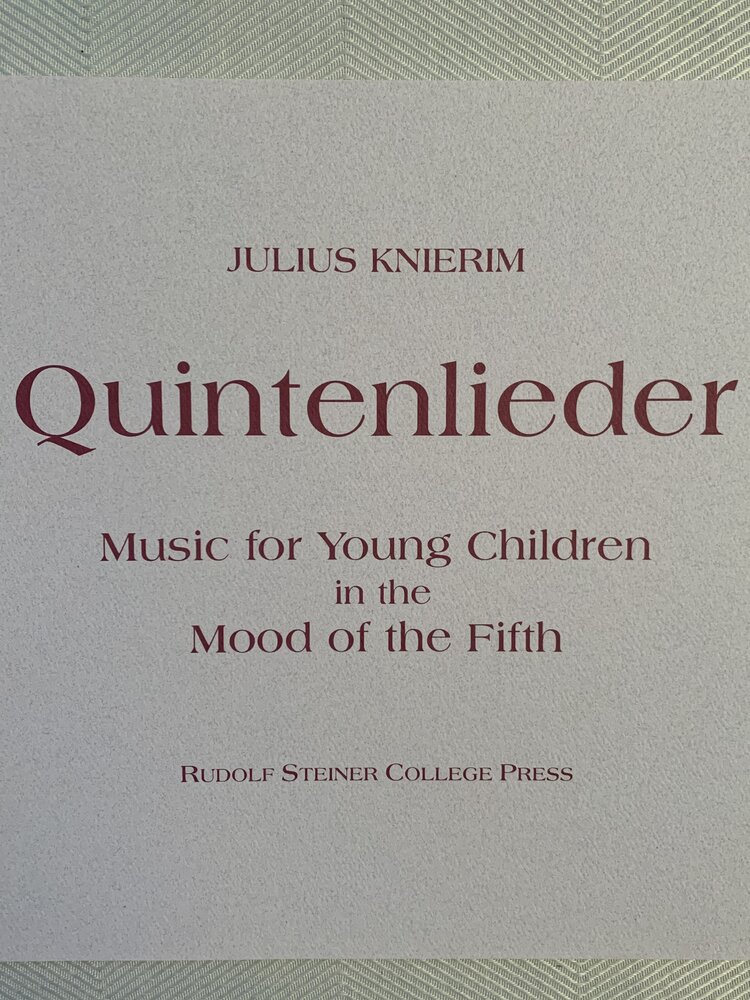
Julius Knierim was greatly influential in developing the musical style of mood of the fifth. He was able to gather all of Steiner’s indications on the topic and create guidelines on how to compose and perform this style of music.
Which notes make up music in the mood of the fifth?
Music in the mood of the fifth is based on the pentatonic scale and it emphasizes the interval of the fifth. Steiner explained that this interval meets young children on their level and can assist in reaching their dream consciousness. It is the most appropriate interval for young children. This musical style emphasizes two fifth intervals; D4 (one note above middle C on a piano) to A4 (the first A above middle C on a piano) and A4 to E5 (the second E above middle C on a piano).
What is a pentatonic scale?
A pentatonic scale is a scale made up of 5 notes. It comes from the Greek word pénte, meaning 5.
Pentatonic scales are often used in folk music. The major pentatonic scale doesn’t contain semitones and has a more open sound than the typical major scale.
How to play a pentatonic scale
On a piano if you play all the black keys you are playing a pentatonic scale.
On a xylophone in C you can play a pentatonic scale by playing the following notes:
CDE GA (C)
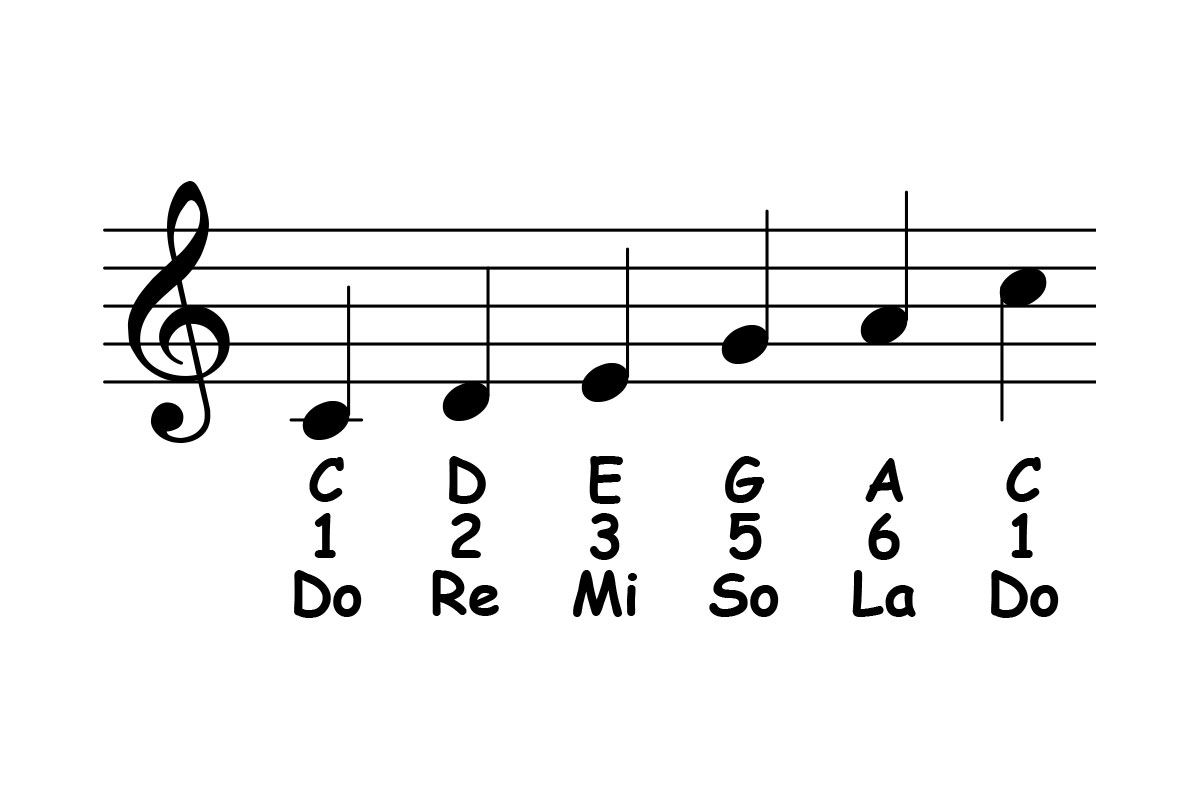
The higher C can be added to complete the scale.
If not in mood of the fifth, then Steiner preschool songs are often in a major or minor pentatonic scale.
What is an interval?
In musical terms an interval is the distance between any two notes. The interval of a fifth consists of five notes, including the first and final note.
Music in mood of the fifth focuses on the interval of the fifth from:
D4 to A4
A4 to E5
Which scale is used in mood of the fifth?
Steiner believed that F and C are inappropriate notes for young children. However, A is the sun tone and highly appropriate for children aged 0 – 7. He also believed that the interval of a fifth should be emphasized.
Combining this information gives us an extended pentatonic scale with the following notes:
DE GAB DE
The centre of the scale is A – the sun tone.
The interval of the fifth can be emphasized through the leap from D4 to A4 and A4 to E5.
This ranged of pitch is generally comfortable for most people, although the higher notes may be difficult to reach – more on that later.

Lemniscate
Mood of the fifth music is also composed using a mirrored pattern surrounding the A tone. The lemniscate, or figure of eight pattern, is used to move from D up to A, up to E then back to A and back down to D.
A smaller lemniscate can also be created by starting at G moving up to A, to B, then back to A and down to G.

This shape helps the music to centre on the A tone (the sun tone) and gives an open, expansive sound to the music.
Rules of music in the mood of the fifth
Apart from using the discussed pentatonic scale (DE GAB DE) and a lemniscate pattern, there are a couple of other guidelines which are used to create this music:
- The music should begin and finish on A. This provides an openness to the music.
- The music doesn’t emphasize the interval of an octave. An octave is an interval of 8 notes such as D – D. Instead mood of the fifth music emphasizes the fifth and to a lesser degree the interval of a 9th from D – E.
- The music is simple and does not have to use all the notes in the given pentatonic scale.
- There is no definite rhythm. For conventional reasons, the music is generally written down with a time signature. However, when performing the song, the timing should follow the words. The music should breathe and have space in it.
Range of pitch
Reaching a top E can be a challenge for many people. Rather than focusing on perfect tuning, the best way to incorporate this music into your day-to-day life is to focus on singing with joy and enthusiasm.
If you find that the pitch is too high and need to sing it at a lower pitch then that is okay. After all, these are just guidelines and singing at a pitch which is comfortable for you is important.
This music should come from the heart and be enjoyable to sing. Hopefully it will reach your young child and enhance their magical world.
Example of Music in the Mood of the Fifth
Further reading:
Julius Knierim – Quintenlieder
Nancy Foster – The Mood of the Fifth: A Musical Approach to Early Childhood



 The Steiner Connection